 Service Notifications
 My Downloads
 Blog
Blog
 AI
AI PSD
PSD INDD
INDD CDR
CDRDesign Guide
Why Every Designer Needs a Restore Point After Installing Windows
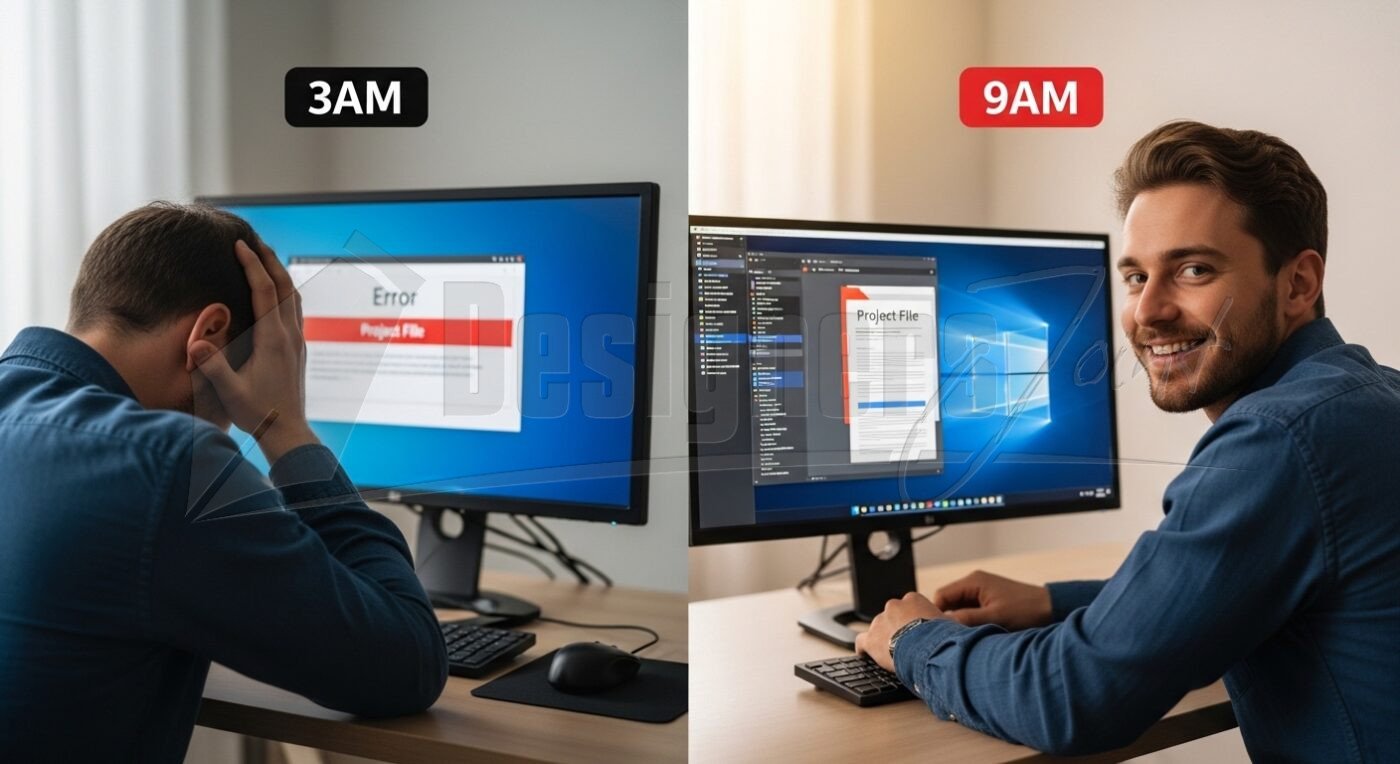
The phone call came at 7:03 AM. My voice was still thick with sleep when my friend Lena’s words hit like ice water: “I lost the Henderson wedding suite. All of it. Windows updated overnight. I saved everything to Documents. It’s just… gone.”
I heard the tremor in her voice—the same tremor I’d when a rogue driver update turned my meticulously calibrated color profile into a neon nightmare two hours before a client presentation. I’d had no restore point. No safety net. Just cold sweat and a desperate prayer to Ctrl+Z gods who weren’t listening.
Lena isn’t careless. She’s a brilliant designer with a thriving studio. She simply didn’t know that Why Every Designer Needs a Restore Point After Installing Windows is the single most overlooked safeguard in a creative workflow. Not fancy hardware. Not expensive plugins. This quiet, free, built-in feature that takes 90 seconds to create.
After rebuilding systems for many years—I’ve seen this pattern repeat like clockwork. Today, I’m pulling back the curtain. No tech-speak. No fearmongering. Just hard truth wrapped in empathy, and the exact steps to protect your work forever.
What a Restore Point Actually Does (No, It’s Not a Backup)
Let’s clear the fog first. A system restore point is not a file backup. It won’t recover your unsaved Illustrator file. What it does is snapshot your system state: Windows settings, registry keys, installed drivers, and critical OS files.
Think of it like this:
- Backup = Saving your painting
- Restore Point = Saving the easel, brushes, lighting, and studio conditions that let you create the painting
Last winter, a designer named Marco installed a “recommended” GPU driver update. His monitor suddenly displayed colors like a melted crayon box. Client proofs were ruined. Panic set in. But because he’d created a restore point right after his fresh Windows install (before adding any third-party software), he rolled back in 12 minutes. System restored. Color accuracy intact. Deadline met.
This distinction is why Why Every Designer Needs a Restore Point After Installing Windows isn’t optional—it’s professional hygiene.
The “Harmless” Update That Broke a Studio
I’ll never forget walking into a boutique branding agency after a Windows Feature Update silently replaced their carefully installed Wacom tablet drivers. Stylus pressure sensitivity? Gone. Brush strokes turned jagged. Artists were drawing with the precision of a potato.
IT spent three days troubleshooting. Projects stalled. Morale tanked. All because no one created a restore point after the initial OS install.
Here’s what Windows doesn’t tell you: Updates can overwrite manufacturer-specific drivers critical for design work—especially color-managed workflows. A restore point created immediately post-install (before adding apps or drivers) is your clean “before” state. When chaos strikes? You revert. No driver scavenger hunts. No client apologies.
This real-world consequence is the heartbeat of Why Every Designer Needs a Restore Point After Installing Windows.
Your 90-Second Lifesaver: Creating the Baseline Restore Point
Do this before installing Photoshop. Before downloading fonts. Before even changing your wallpaper.
- Type “Create a restore point” in Windows Search
- Click Configure next to your C: drive
- Ensure “Turn on system protection” is selected (allocate 5-10% disk space)
- Click Create
- Name it clearly: “BASELINE – CLEAN WINDOWS INSTALL”
- Click Create again
Done.
I time this ritual with a kitchen timer. 90 seconds. While the coffee brews. While the dog begs for breakfast. It’s non-negotiable. I’ve done this on every machine I’ve touched since 2009. Not once have I regretted it. Not once has it failed me.
This simple act embodies Why Every Designer Needs a Restore Point After Installing Windows—it’s the anchor in a storm you didn’t see coming.
When to Create Additional Restore Points (The Designer’s Trigger List)
Your baseline restore point is sacred. But layer these strategic points too:
- ✅ After installing GPU drivers (Studio Driver for NVIDIA, Pro Driver for AMD)
- ✅ After calibrating your display (X-Rite, Datacolor, or Windows calibrator)
- ✅ Before major Windows updates (check Update History for pending Feature Updates)
- ✅ After installing core creative apps (Adobe Suite, Corel, Affinity)
Name them intentionally:
- “POST-WACOM DRIVER INSTALL”
- “PRE-WINDOWS 11 23H2 UPDATE”
- “AFTER EIZO CALIBRATION 10-15-2026”
Last month, a motion designer created a restore point before installing a niche plugin for After Effects. The plugin conflicted with her audio drivers. She reverted in 8 minutes. Project untouched. Deadline intact. She texted me: “You saved my sanity. And my client.”
This proactive rhythm proves Why Every Designer Needs a Restore Point After Installing Windows extends far beyond day one.
Restore Points ≠ Backups: The Critical Partnership
Let’s be crystal clear:
- 🔄 Restore Point = Fixes system instability (drivers, updates, conflicts)
- 💾 Backup = Recovers lost files (deleted PSDs, corrupted AI files)
They work together. Always.
I follow the 3-2-1 rule religiously:
- 3 copies of active projects (original + 2 backups)
- 2 media types (cloud + external SSD)
- 1 offsite location (Backblaze, Dropbox)
But without that baseline restore point? Restoring files means reinstalling Windows again, hunting drivers again, recalibrating again. Hours lost. Stress multiplied.
Your restore point gets your system healthy. Your backup saves your work. Never confuse the two. This synergy is why Why Every Designer Needs a Restore Point After Installing Windows is only half the story—but the half most designers skip.
The Designer’s Post-Install Checklist (Print This)
Before you open any creative application:
- Create BASELINE restore point (C: drive, named clearly)
- Verify system protection is ON for C: drive
- Install manufacturer GPU drivers (NOT Windows Update versions)
- Create SECOND restore point named “POST-GPU DRIVER”
- Set up cloud backup targeting only your project partition/folder
- Calibrate display and create THIRD restore point
- Breathe. You’ve built a fortress.
I keep this checklist taped inside my workstation lid. I’ve given laminated copies to every junior designer I’ve mentored. It’s not paranoia—it’s professionalism.
You didn’t spend years honing your eye, your style, your voice to have a silent Windows update erase your progress. You deserve to create with confidence—not dread. That restore point isn’t “tech stuff.” It’s respect for your craft. For your clients. For the 3 AM version of you who’s pouring heart into a project.
Stop leaving your workflow to chance.
FAQs
Q: Will creating a restore point delete my personal files or installed programs?
A: Absolutely not. Restore points only affect system files, settings, and programs installed after the restore point was created. Your documents, photos, project files, and fonts remain completely untouched. Reverting simply returns Windows to a previous configuration state.
Q: How much disk space should I allocate for system protection?
A: For a typical designer rig (512GB+ SSD), allocate 7-10% of your C: drive space. Windows manages this automatically—older restore points get pruned as new ones are created. Never disable it to “save space.” That 10GB could save 40 hours of your life.
Q: Can I create a restore point on an external drive or secondary partition?
A: No—and this is critical. Restore points only protect the drive they’re created on (almost always C:). That’s why your project files must live on a separate partition (D:) or drive. The restore point saves your system; your backup strategy saves your work. Keep these roles distinct.
Q: I use Mac. Does this apply to me?
A: This article focuses on Windows workflows. Mac users rely on Time Machine for similar system recovery (though implementation differs). If you’re a Mac designer, bookmark this anyway—many studios use Windows machines for specific tasks like CAD or gaming-adjacent design work. And if you ever switch ecosystems? You’ll be ready.